

Remember when talking to Siri felt like shouting commands at a confused robot? In 2011, Apple’s voice assistant could barely handle simple requests without exact phrasing. Fast forward to today, and you’re having natural conversations with ChatGPT-powered assistants that remember context, understand nuance, and actually respond like they get what you mean. This transformation didn’t happen by accident. Three core AI technologies—natural language processing, machine learning, and neural networks—evolved from clunky pattern-matching systems into sophisticated conversational partners. This article explores how voice assistants went from recognizing keywords to grasping intent, context, and the subtle meanings that make human conversation flow naturally. The journey from “set alarm” to genuine dialogue reshaped how we interact with technology.
From Simple Commands to Natural Conversations

The Early Days: Siri and Basic Voice Recognition
When Apple unveiled Siri alongside the iPhone 4S in October 2011, millions of people had their first real conversation with a machine. Built on Nuance Communications’ speech recognition technology, Siri could set alarms, send texts, and answer basic questions. But the magic wore off quickly. Siri didn’t really understand you—it matched your words against a database of programmed responses. Ask “What’s the weather?” and you’d get an answer. Rephrase it slightly, and Siri often stumbled.
These early voice assistants operated on rigid command-response frameworks. They recognized keywords and patterns, not meaning. If you deviated from expected phrasing, the system broke down. Speech recognition was functional but frustratingly literal, understanding words without grasping context or intent.
The Smart Speaker Revolution
Amazon changed the game in 2014 with Alexa and the Echo smart speaker. Rather than living in your pocket, Alexa sat in your living room, always listening, always ready. The device brought voice AI into homes at scale, making it a natural part of daily routines. Alexa wasn’t necessarily smarter than Siri at launch, but its positioning made voice interaction habitual rather than occasional.
The real transformation came as neural networks and transformer-based models entered the picture. Modern voice assistants leverage architectures like BERT and GPT to understand context, remember previous exchanges, and interpret meaning beyond literal words. They moved from pattern matching to genuine language comprehension.
The numbers tell the story. Voice recognition accuracy hovered around 80% in 2017—good enough to be useful, frustrating enough to make you repeat yourself. By 2023, that figure crossed 95% for English queries. Today’s assistants don’t just hear you better—they understand nuance, handle follow-up questions, and maintain conversational context across multiple turns. The shift from robotic command interpreter to conversational partner happened gradually, then suddenly.
The Three AI Technologies That Changed Everything
Voice assistants didn’t get smart overnight. Three distinct AI technologies had to mature and work together seamlessly before Siri, Alexa, and Google Assistant could understand what you’re asking and actually respond like they get it.
Automatic Speech Recognition (ASR) handles the first challenge: converting the sound waves of your voice into text a computer can process. Early systems struggled with accents, background noise, and natural speech patterns. The 2012 deep learning breakthrough changed the game, slashing ASR error rates from 26% to 16% practically overnight. Today’s systems hit over 95% accuracy for English queries, a massive leap from the 80% accuracy rates of 2017.
Natural Language Understanding (NLU) tackles the harder problem: figuring out what you actually mean. When you say “It’s freezing in here,” NLU determines whether you’re making a weather observation or asking to adjust the thermostat. Modern voice assistants use transformer-based models like BERT and GPT architectures to grasp context and intent, moving far beyond the rigid rule-based systems that required exact phrasing.
Text-to-Speech (TTS) closes the loop by generating responses that sound natural rather than robotic. The difference between early TTS and current systems is night and day. Google Assistant leverages the Knowledge Graph containing over 500 billion facts to craft informed responses, while advanced neural networks create voices with natural inflection, pacing, and emotion.
These three technologies operate in milliseconds:
- Your voice gets captured and converted to text (ASR)
- The system interprets your intent and retrieves relevant information (NLU)
- A natural-sounding response gets generated and spoken back (TTS)
The magic happens when all three work together seamlessly, creating the illusion of genuine conversation.
How Neural Networks Taught Assistants to Understand Context
Early voice assistants were glorified command executors. Say “set timer for 10 minutes” and they’d work. Ask “how long should I cook this?” followed by “set a timer for that” and they’d fail completely. The breakthrough came when neural networks learned to remember what “that” meant.
The Transformer Revolution
Transformer-based models like BERT and GPT fundamentally changed how assistants process language. Instead of matching keywords to predefined responses, these architectures understand relationships between words across entire sentences and conversations. When Google integrated BERT into Assistant in 2019, the system could suddenly grasp that “it” in your follow-up question referred to the restaurant you asked about three exchanges ago.
The difference is architectural. Rule-based systems followed decision trees: if user says X, respond with Y. Transformers use attention mechanisms that weigh every word against every other word, capturing nuance and context that rigid rules miss. This is why you can now ask “What’s the weather?” then “Will I need an umbrella?” and the assistant connects both queries without restating your location.
Knowledge Graphs and Real-World Understanding
Google Assistant’s real advantage comes from pairing transformers with its Knowledge Graph, a massive database containing over 500 billion facts about real-world entities. When you ask about “the actor from that Marvel movie who was in Oppenheimer,” the system doesn’t just parse words. It maps relationships between movies, actors, and roles to deliver Robert Downey Jr. without you naming him.
This combination of contextual language models and structured knowledge enables multi-turn conversations that feel natural. You can ask about a business, then “what are their hours?” then “get directions there” without repeating yourself. The assistant maintains conversation state across queries.
The latest evolution integrates ChatGPT-style models directly into voice interfaces. These large language models handle ambiguous requests and generate human-like responses, moving assistants beyond information retrieval into genuine dialogue. Context isn’t just understood anymore—it’s anticipated.
Privacy Meets Intelligence: On-Device AI Processing
Voice assistants faced a fundamental problem: getting smarter meant sending more of your conversations to the cloud. The solution came through a shift to on-device AI processing, where intelligence happens locally before anything leaves your phone or smart speaker.
The first breakthrough was wake word detection. Instead of streaming audio constantly to remote servers, voice assistants now use specialized neural networks that run directly on device hardware. These always-on models listen for trigger phrases like “Hey Siri” or “Alexa” using minimal power and processing. Only after detecting the wake word does the device activate full recording and processing.
Apple pushed this approach furthest with Siri, processing many requests entirely on-device starting with iOS 15. Voice recognition, natural language understanding, and even some responses happen without internet connectivity. The Neural Engine in Apple’s chips handles these AI workloads efficiently enough to preserve battery life while maintaining privacy.
Federated learning changed how voice assistants improve without compromising user data. Rather than uploading voice recordings to central servers, the AI model trains locally on each device. Only the improved model parameters—not your actual voice data—get sent back to update the global system. Google Assistant uses this technique to refine wake word detection and personalization while keeping sensitive information on your device.
This hybrid architecture balances capability with privacy. Complex queries requiring vast knowledge databases still route to the cloud, but routine commands, personal information requests, and sensitive interactions stay local. The result is voice assistants that respect privacy concerns without sacrificing the intelligence users expect from modern AI systems.
Learning From Every Interaction
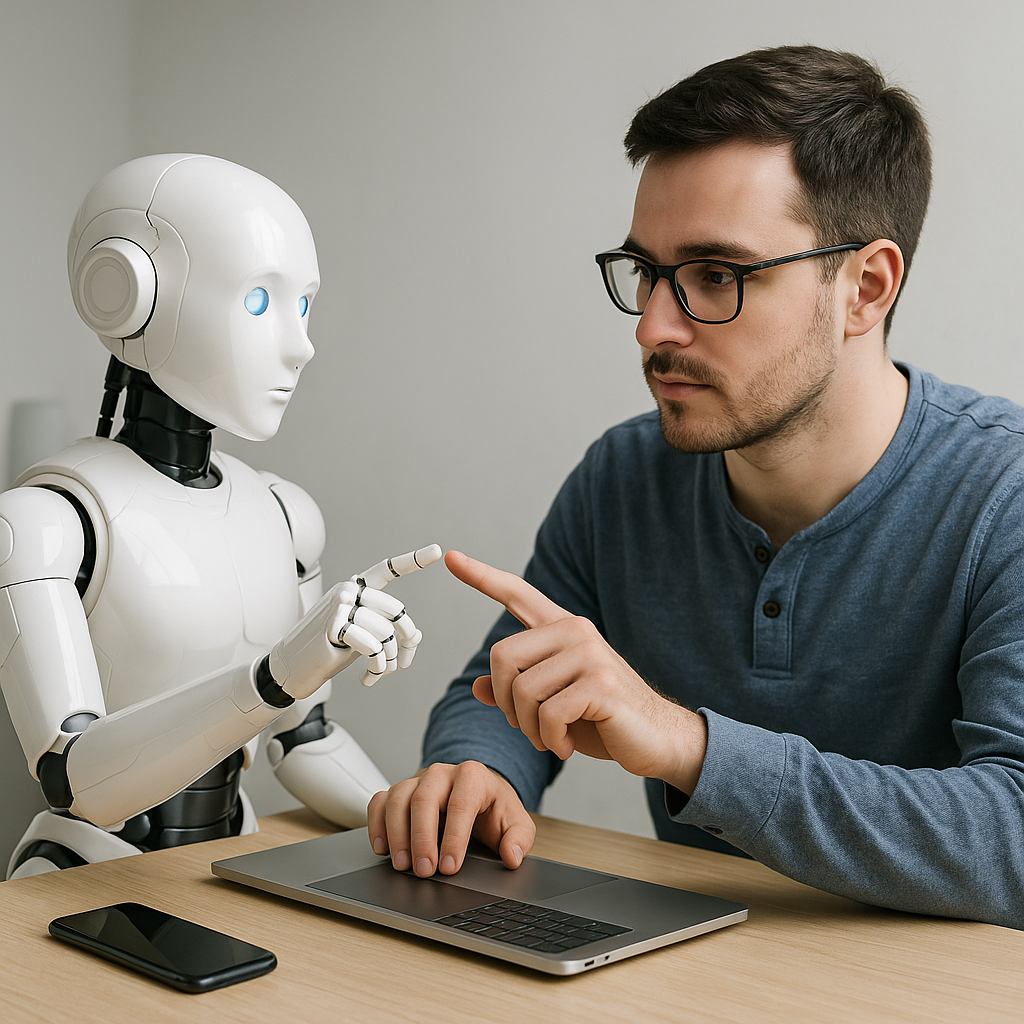
Voice assistants don’t just respond to commands—they get better with every question you ask. Behind the scenes, these systems analyze billions of daily interactions to refine their understanding of language, context, and user intent through reinforcement learning from human feedback (RLHF).
RLHF works like a feedback loop. When users correct Alexa, rephrase questions for Siri, or skip certain Google Assistant suggestions, the AI registers these signals. Engineers use this data to fine-tune the underlying models, teaching the assistant which responses work and which fall flat. It’s the same technology that made ChatGPT conversational, now applied to voice interfaces.
The numbers tell the story. Amazon’s Alexa launched in 2014 with basic functionality—setting timers, playing music, answering simple questions. By 2016, it had 130 skills. Today, that number exceeds 100,000 skills across dozens of languages. Each skill represents countless user interactions that shaped its development.
Machine learning enables personalization at scale. Your voice assistant remembers your preferred news sources, adjusts to your accent over time, and learns which smart home devices you control most often. Google Assistant can distinguish between voices in the same household, serving personalized calendar reminders and music preferences without you specifying who’s talking.
This continuous improvement cycle happens automatically. Every misunderstood command, every successful interaction, and every user correction feeds back into training data. The assistant running on your device today is measurably smarter than the one from six months ago, trained on patterns from millions of users who asked similar questions before you.
The result? Voice recognition accuracy jumped from 80% in 2017 to over 95% in 2023 for English queries—a leap that makes these assistants genuinely useful rather than frustrating novelties.
Beyond Voice: Multimodal AI Integration
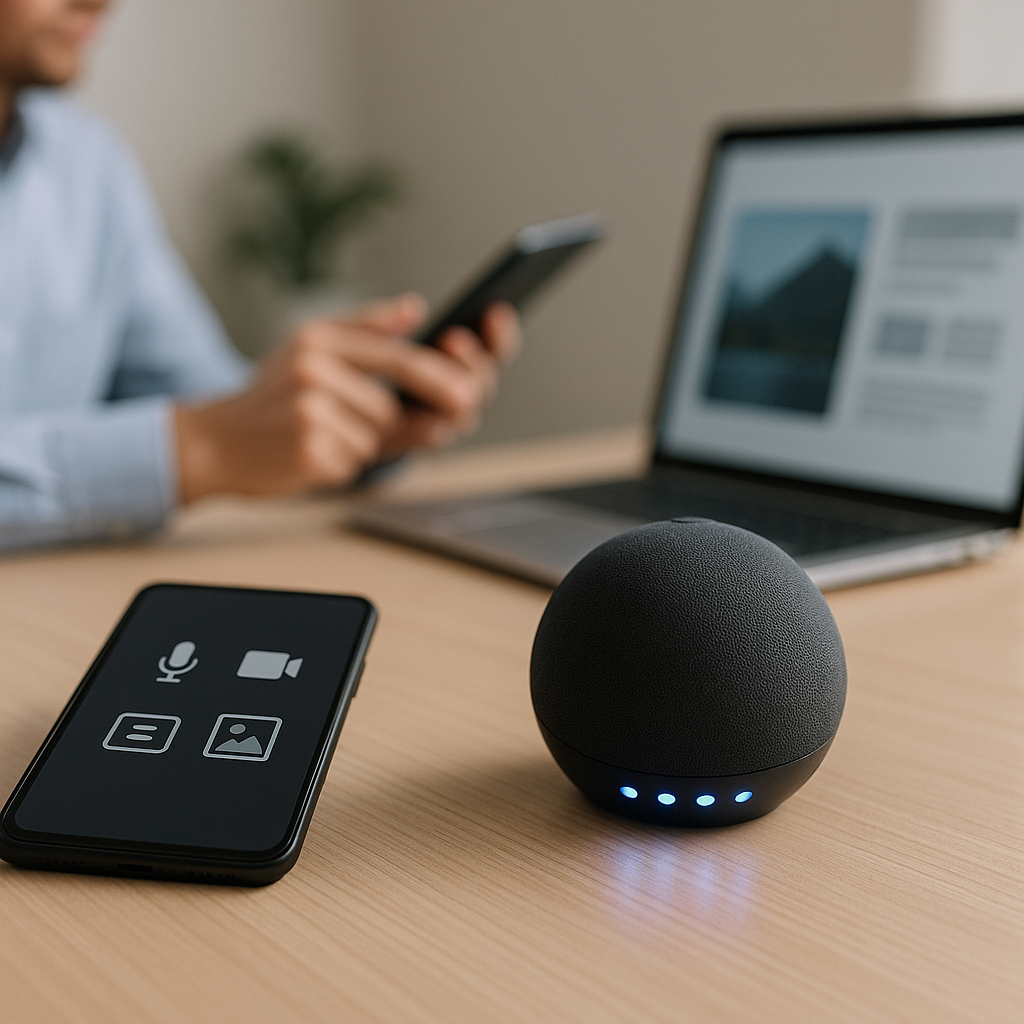
Voice assistants no longer rely solely on spoken commands. The latest generation combines audio, visual, and touch inputs to create interactions that feel more human and contextually aware.
Devices like Amazon’s Echo Show and Google Nest Hub demonstrate this shift perfectly. Ask about the weather, and you’ll hear the forecast while seeing a detailed seven-day visual breakdown. Request a recipe, and step-by-step instructions appear on screen while the assistant reads them aloud. This multimodal approach transforms what used to be one-dimensional exchanges into rich, layered experiences.
The technology behind this integration uses AI models that process multiple data streams simultaneously. When you ask an Echo Show to show your front door camera, it’s interpreting your voice command, pulling video feed data, and displaying it in a contextually appropriate format—all within seconds. Google Nest Hub takes this further by recognizing gestures, allowing users to pause music or snooze alarms with a simple hand wave.
This convergence makes interactions feel significantly more natural. Instead of memorizing specific voice commands, users can point at a screen, tap an option, or speak naturally—whatever feels most intuitive in the moment. The assistant adapts to the input method rather than forcing users into rigid interaction patterns.
The trajectory is clear: future voice assistants will seamlessly blend even more sensory inputs. We’re moving toward systems that understand not just what we say, but what we see, touch, and even where we’re looking—creating truly ambient computing experiences.
The Impact: By the Numbers

Voice assistants have transformed from novelty features into mainstream technology, and the numbers tell a compelling story of rapid adoption and economic impact.
The scale of deployment is staggering. As of 2023, over 4.2 billion voice assistant devices are actively in use worldwide. That’s more than half the global population with access to AI-powered voice technology. These devices range from smartphones and smart speakers to cars, TVs, and wearables.
The market trajectory shows no signs of slowing. Industry analysts project the global voice assistant market will reach $49.8 billion by 2030, representing a compound annual growth rate of 24.1%. This explosive growth reflects both increased device penetration and expanding use cases across industries.
Consumer behavior has shifted dramatically toward voice interfaces:
- Search preferences: 71% of consumers now prefer voice search over typing for quick queries
- Geographic reach: Google Assistant operates in over 90 countries and supports more than 30 languages, making voice AI truly global
- Commerce adoption: Voice-enabled shopping is expected to hit $80 billion by 2025, as consumers grow comfortable making purchases through voice commands
- Accuracy improvements: Voice recognition accuracy has jumped from 80% in 2017 to over 95% in 2023 for English queries
These metrics reveal more than just adoption numbers. They demonstrate a fundamental shift in human-computer interaction. Voice has evolved from an alternative input method to a primary interface, particularly for hands-free scenarios like driving, cooking, or multitasking.
The combination of widespread availability, improved accuracy, and growing consumer trust has created a self-reinforcing cycle. As more people use voice assistants, AI models collect more training data, which further improves performance and drives additional adoption.
The Future Is Conversational
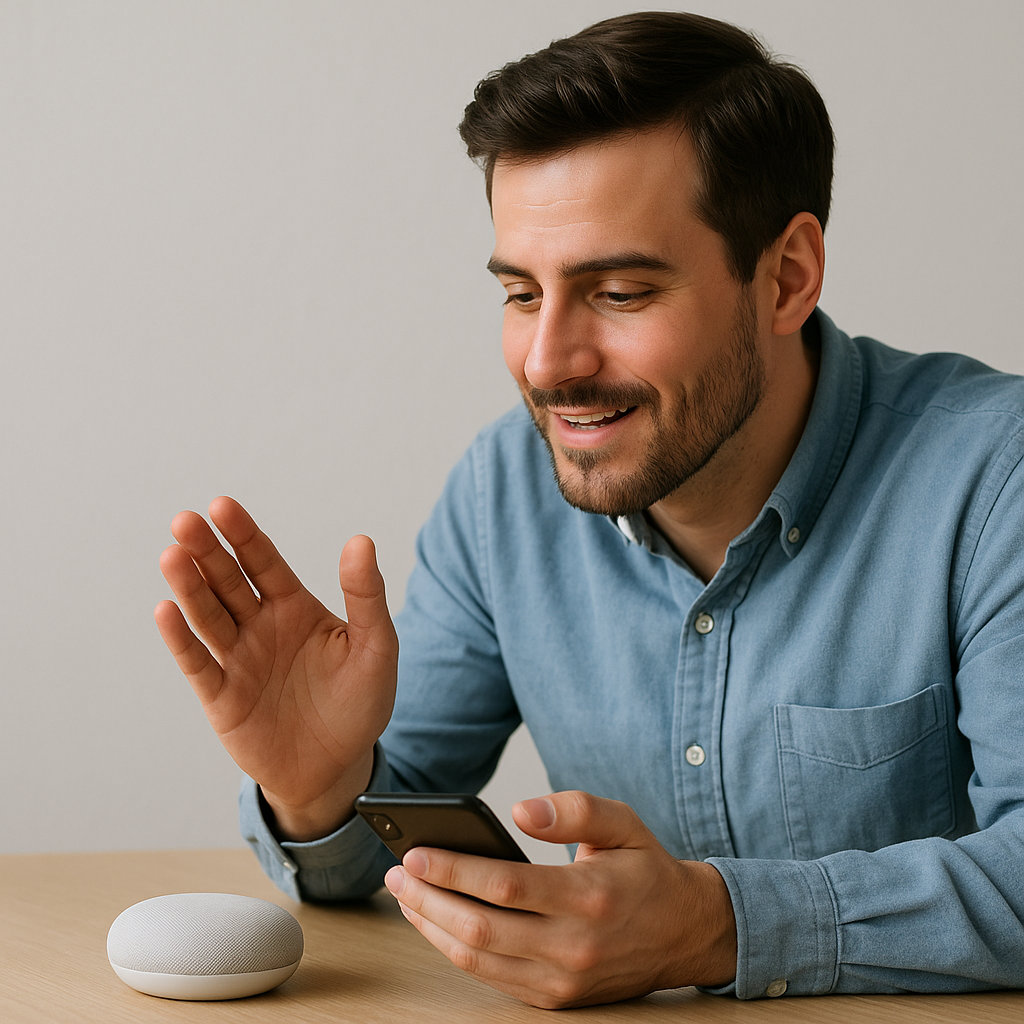
The transformation of voice assistants from novelty to necessity didn’t happen because of one breakthrough—it required the convergence of multiple AI technologies working in concert. Natural language processing taught machines to understand what we mean, not just what we say. Neural networks enabled context awareness that makes conversations flow naturally across multiple exchanges. Machine learning created systems that improve with every interaction, while privacy-conscious on-device processing ensured intelligence without surveillance.
We’re now entering the next phase of this evolution. ChatGPT integration is making assistants genuinely conversational rather than transactional. Multimodal capabilities are blending voice with vision, touch, and gesture. The assistants of tomorrow won’t just respond to commands—they’ll anticipate needs, understand emotional context, and seamlessly integrate across every device and surface in our lives.
Voice is becoming the primary interface for technology, not because it’s trendy, but because it’s fundamentally human. As AI continues advancing, the distinction between talking to a person and talking to your assistant will blur further. The question isn’t whether voice will dominate how we interact with technology—it’s how quickly we’ll forget we ever typed at all.