

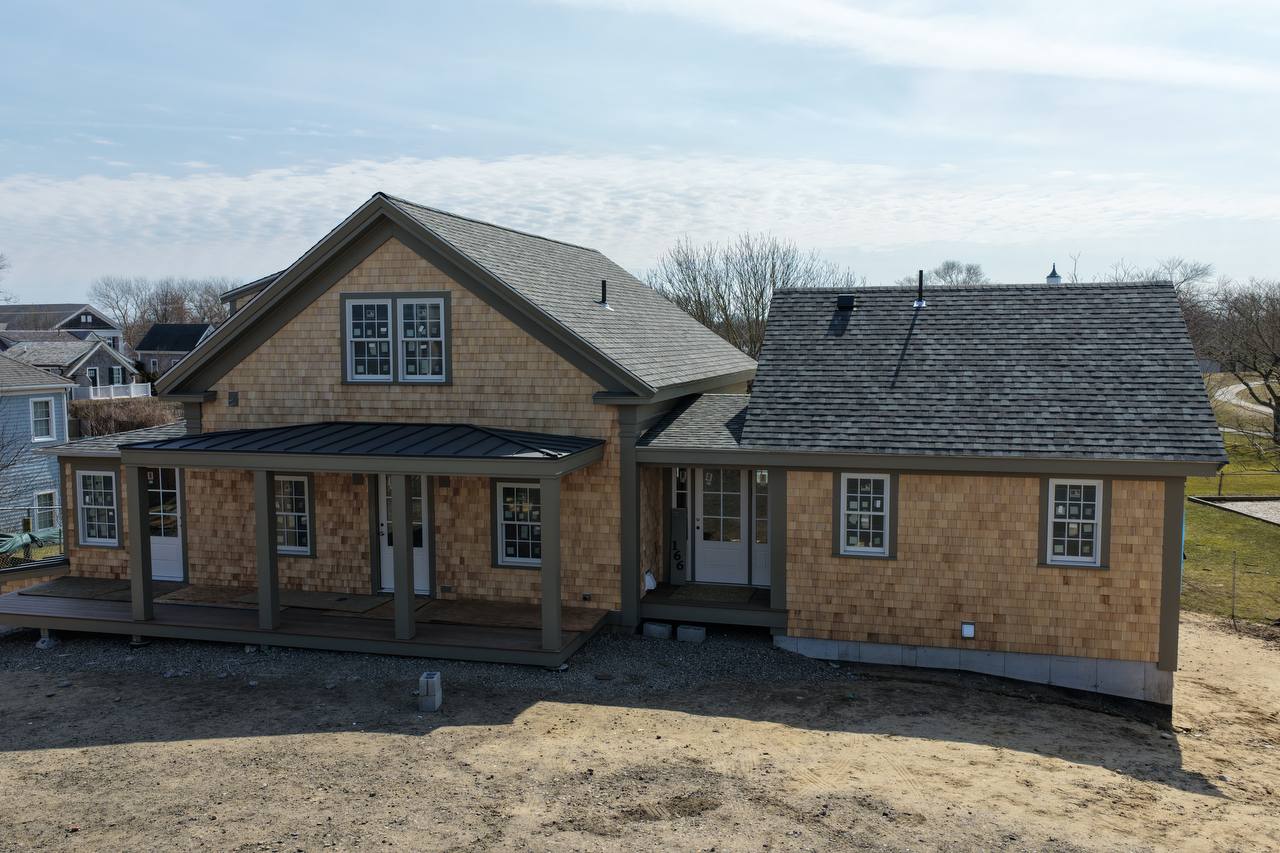
Coastal architecture in Chatham, Massachusetts, operates at the intersection of historic New England tradition and modern environmental demands. Salt aerosols, rapid humidity shifts, and seasonal temperature cycling require cladding systems that balance breathability, dimensional stability, and long-term weather resistance. For a recent multi-volume waterfront residence, our engineering and installation teams executed a complete exterior transformation centered on premium Cedar siding, delivering a fully integrated, high-performance facade in a tightly coordinated 7-day window. This project serves as a practical case study in how material science, precision detailing, and disciplined project management converge to achieve rapid deployment without sacrificing structural integrity or aesthetic refinement. Below, we break down the technical protocols, installation standards, and environmental considerations that define a resilient coastal cladding system.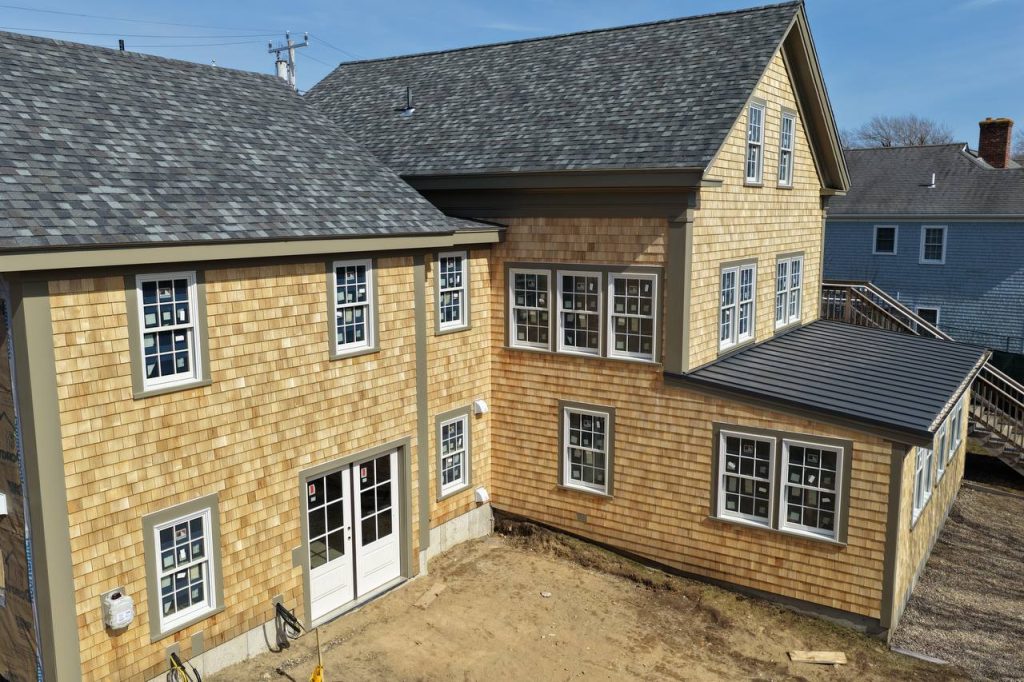
White Cedar: Engineered Breathability & Coastal Durability
White cedar is selected for coastal applications not merely for its pale, refined aesthetic, but for its cellular composition and natural moisture management properties. The wood contains high concentrations of extractives that act as built-in biocides, resisting fungal colonization and insect infestation without chemical treatments. More importantly, its low shrinkage coefficient (~4.2% radial, ~7.1% tangential) minimizes seasonal warping and gap formation—a critical advantage in environments where relative humidity can swing 40% within a single week.
Unlike composite or PVC cladding systems that trap moisture behind impermeable surfaces, white cedar operates as a vapor-permeable envelope. We maintain a consistent 1/8” back-ventilation gap behind each shingle course, allowing capillary moisture to evaporate while preventing condensation buildup against the sheathing. The material is kiln-dried to 12–14% moisture content prior to installation, aligning it with Chatham’s average equilibrium moisture content and reducing post-installation expansion stress. When sourced and installed correctly, white cedar delivers a predictable 40–50 year service life with minimal structural degradation.
Precision Detailing Across Multi-Volume Architectures
The Chatham residence features a layered architectural layout: staggered roof volumes, elevated porches with integrated wood decking, an exterior staircase connecting ground and second-floor terraces, and a wide array of window configurations. Each transition introduces hydrodynamic and wind-load variables that demand tailored installation protocols.
Fastener selection was prioritized for corrosion resistance and holding power. We specified 316-grade stainless steel ring-shank nails, driven to a controlled depth that avoids fiber crushing while maintaining a minimum 1.25” penetration into structural framing. Ring-shank geometry increases pull-out resistance by ~35% compared to smooth shanks, a critical factor in high-wind coastal zones where cyclic loading can loosen traditional fasteners over time.
Corner and transition detailing eliminated reliance on sealants, which degrade rapidly under UV exposure. Instead, we implemented a staggered interlocking sequence where shingles from adjacent walls overlap in a continuous drainage plane. This method removes vulnerable vertical seams, distributes wind pressure more evenly across wall intersections, and creates the seamless, architecturally refined finish characteristic of high-end coastal design. Around window and door openings, flashing was integrated behind the weather-resistive barrier and lapped over the siding course below, ensuring water is directed outward rather than trapped at penetrations.
The 7-Day Execution Protocol: Logistics Under Tight Constraints
Completing a full facade replacement on a complex, multi-elevation home in one week is not a product of acceleration—it’s a product of precision planning and phased deployment. Coastal weather windows are narrow, and material handling requires strict moisture control.
We structured the workflow into three synchronized phases:
- Pre-Installation & Substrate Verification (Day 1–2): Controlled removal of existing cladding, moisture testing of sheathing, and repair routing for compromised framing. A weather-resistive barrier with integrated drainage matting was installed to establish a continuous secondary water management layer.
- Rapid-Deploy Siding Installation (Day 3–5): Crews worked in rolling zones, moving from lower elevations to upper volumes to maintain continuous underlayment coverage. Pre-cut shingles and off-site corner templating reduced on-site cutting waste by ~30%, while laser-guided chalk lines ensured consistent exposure and alignment across all planes.
- Detail Integration & QA Audit (Day 6–7): Trim coordination, fastener verification, ventilation gap inspection, and final weather-sealing at architectural transitions. A rolling quality-control checklist was enforced at every 200 sq ft interval, with zero tolerance for misaligned courses or inconsistent fastener depth.
Real-time weather tracking aligned critical steps with dry, low-humidity periods. Pre-staged material staging, redundant scaffolding, and cross-trained crew members minimized downtime. The result was a structurally sound, visually seamless facade delivered on schedule without compromising installation standards.
Architectural Integration & Natural Patina Evolution
The exterior palette was carefully engineered to complement Chatham’s coastal landscape. A dark gray asphalt roof provides thermal absorption and visual grounding, while muted gray-green trim adds subtle contrast without competing with the natural wood tones. White-framed divided-light windows introduce architectural rhythm and reflect ambient coastal light, enhancing the home’s modern yet historically rooted character.
White cedar’s long-term aesthetic evolution is a functional advantage, not a cosmetic compromise. Within 12–24 months, UV exposure and natural oxidation will transition the surface to a uniform silver-gray patina. This process is driven by lignin breakdown at the wood’s outermost layer, forming a dense, moisture-repellent crust that actually improves weather resistance over time. The patina development is uniform when shingles are installed with consistent grain orientation and proper back-ventilation, preventing patchy or uneven weathering.
Long-Term Performance & Maintenance Realities
Premium natural materials require informed stewardship. We recommend bi-annual inspections focusing on fastener head exposure, trim sealant flexibility, and drainage path clearance around porches and stair transitions. Gentle low-pressure rinsing removes salt crystallization and organic debris without compromising the wood’s cellular structure; high-pressure washing or alkaline cleaners should be avoided, as they strip natural extractives and accelerate surface degradation.
EPDM or asphalt roof intersections should be verified annually for membrane shrinkage or flashing displacement. With proper drainage maintenance and occasional spot-replacement of impact-damaged shingles, the white cedar cladding system will reliably exceed 40 years of service in Cape Cod’s marine climate.
Final Notes for Coastal Renovation Professionals
Coastal cladding projects succeed when material science, geometric precision, and disciplined execution align. The Chatham installation demonstrates how traditional cedar craftsmanship, when integrated with modern ventilation protocols and weather-aware project management, creates a resilient architectural envelope. For builders, architects, and homeowners navigating similar coastal renovations, the difference between premature failure and generational performance lies in the details: fastener compatibility, drainage continuity, and uncompromising transition detailing.